How to Keep Track of Everything You’ve Read
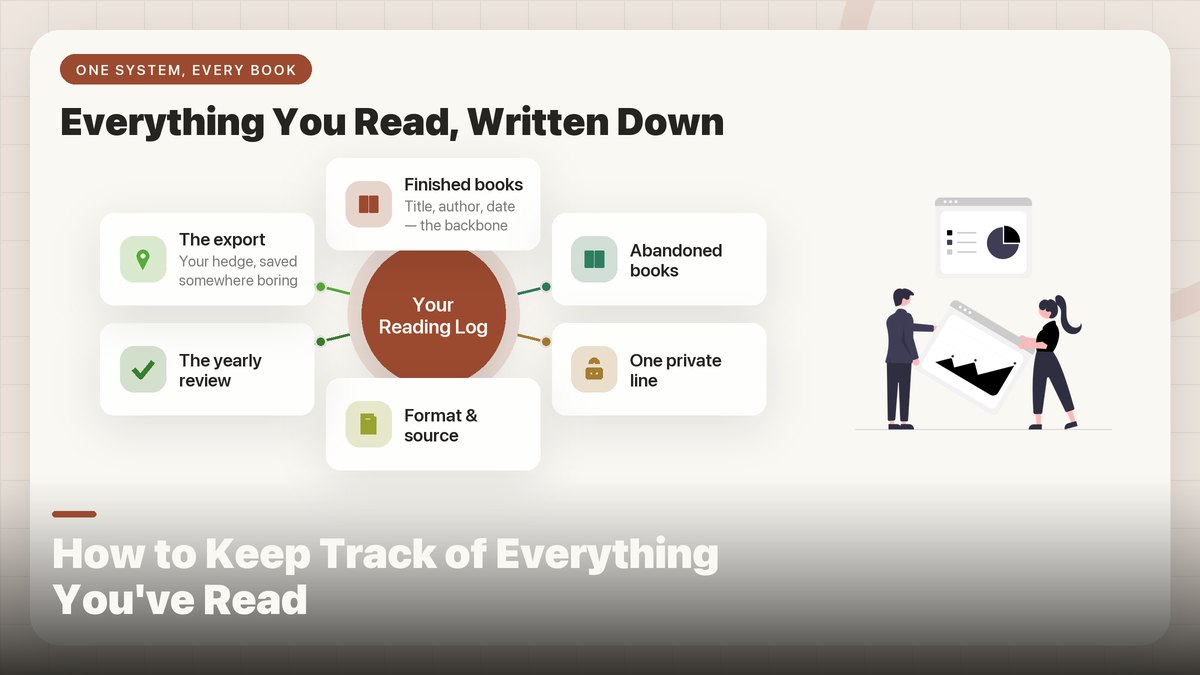
Halfway through chapter two of a novel you’re sure is new, a quiet alarm goes off: you’ve read this book before, maybe twice, and the giveaway is some detail you can’t place, a lighthouse, a letter, arriving before the author gets to it. This is the simple system that makes that moment impossible, and what your own reading history can teach you once it’s written down.
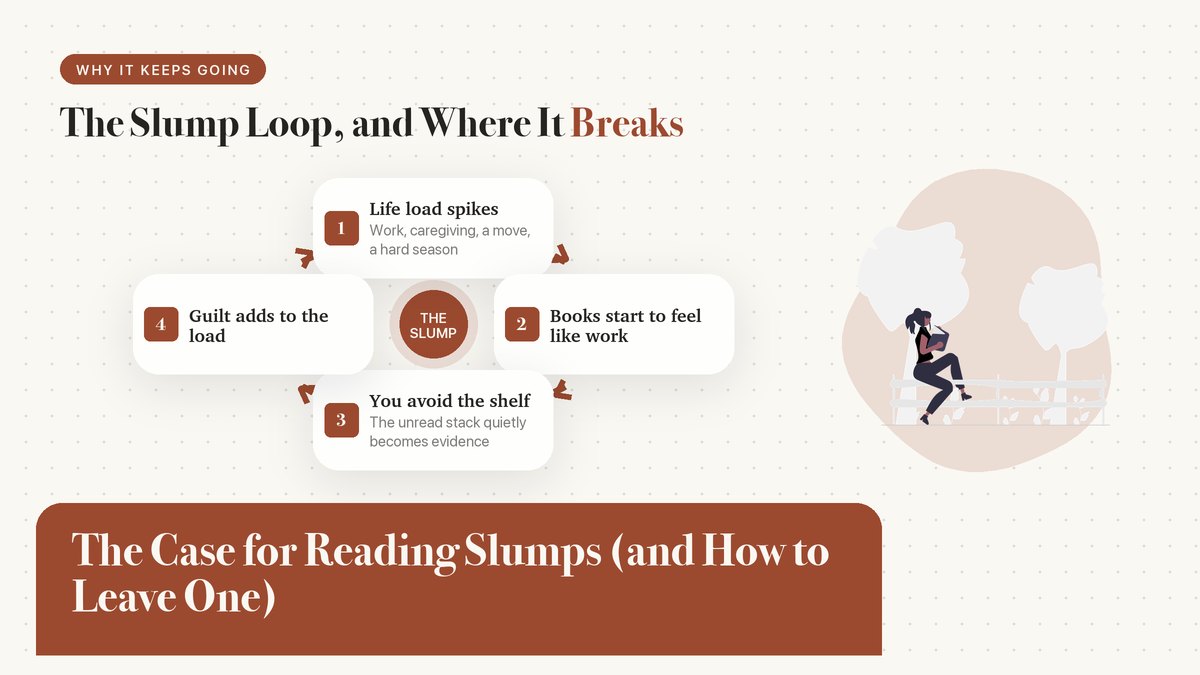
The Case for Reading Slumps (and How to Leave One)

Every reader I know has gone missing from their own bookshelf for a stretch, and the 2021 Pew Research Center survey says a quarter of American adults didn’t read a book, in whole or in part, in the previous twelve months. The slump has a bad reputation, and most of what you’ve heard about it, that it’s failure, that you must power through, that the cure is discipline, mostly makes it last longer rather than shorter.

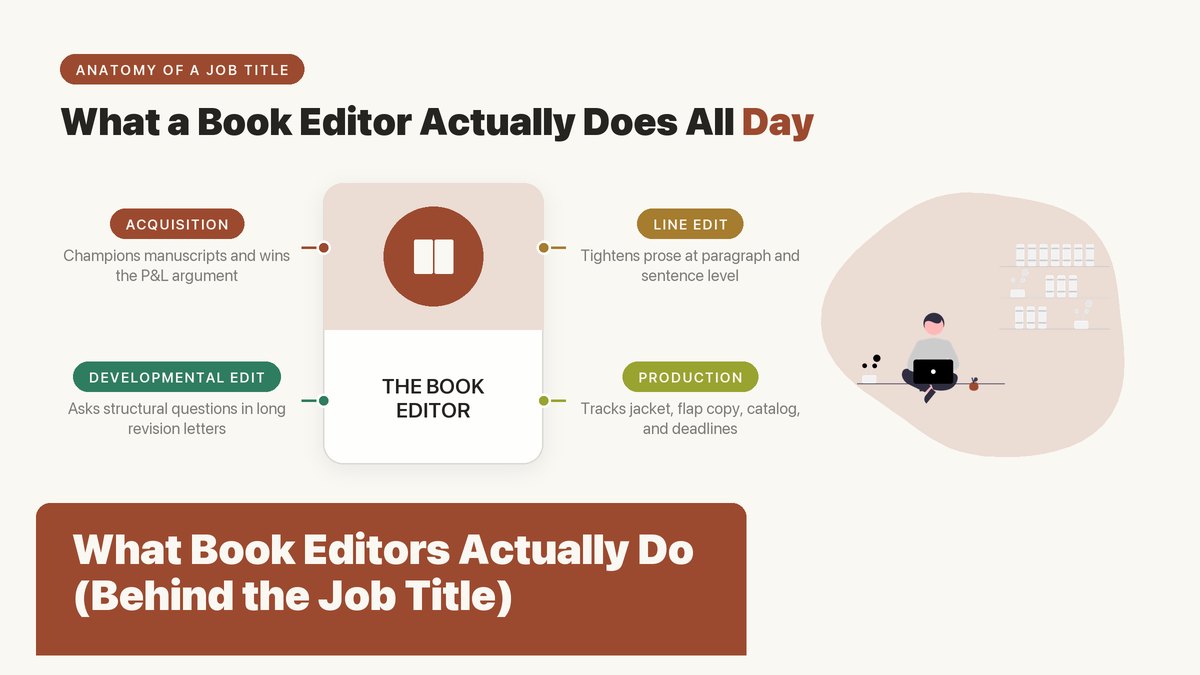
What Book Editors Actually Do (Behind the Job Title)

The Bureau of Labor Statistics files the job under “editors,” puts the 2025 median wage at $77,920 a year, and describes the work as planning, reviewing, and revising content for publication, which leaves out most of what actually fills the day. Ask most people what a book editor does and they’ll picture someone curling up with a manuscript and a red pen, fixing commas. The real job is stranger, more businesslike, and to my mind a lot more interesting than that.

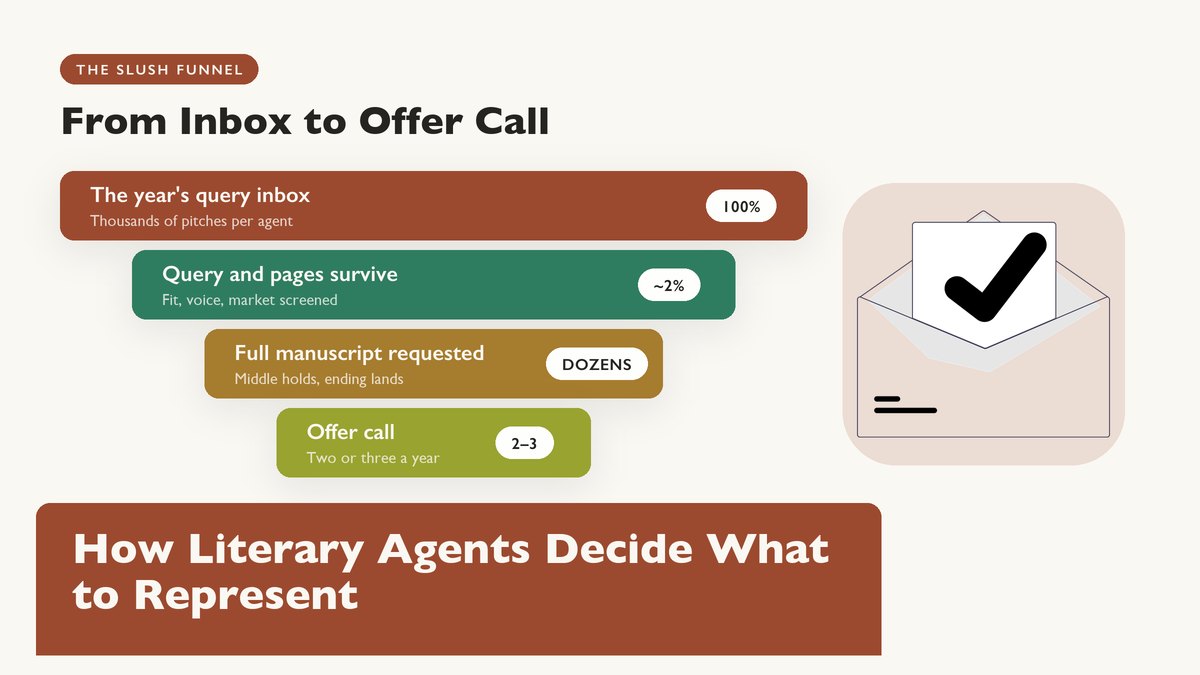
How Literary Agents Decide What to Represent

Most queries die in under two minutes, and it has almost nothing to do with how good your book is. An agent with a full client list can open a hundred messages before lunch and sign two writers all year. This is how agents filter the pile, from the first skim of a query letter to the phone call that changes a manuscript’s life.

How to Revise a First Draft Without Losing What Works

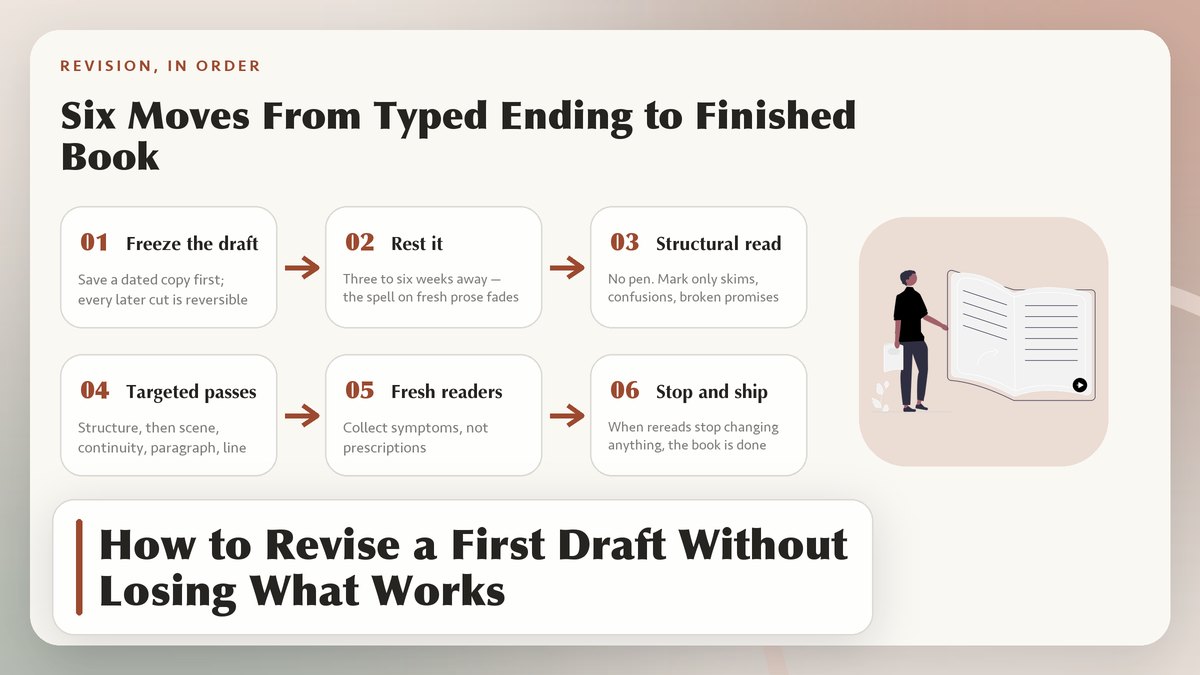
The first draft of your novel is done (at a NaNoWriMo pace that’s 50,000 words typed in thirty days), and now the dangerous part begins. Not the fixing, the choosing. Every cut risks amputating something alive, and every polish can sand off the voice that made the draft worth finishing in the first place. The writers who revise well don’t have steadier hands. They have a sequence, and it starts with putting the manuscript in a drawer for six weeks.

Point of View: Choosing Who Tells the Story

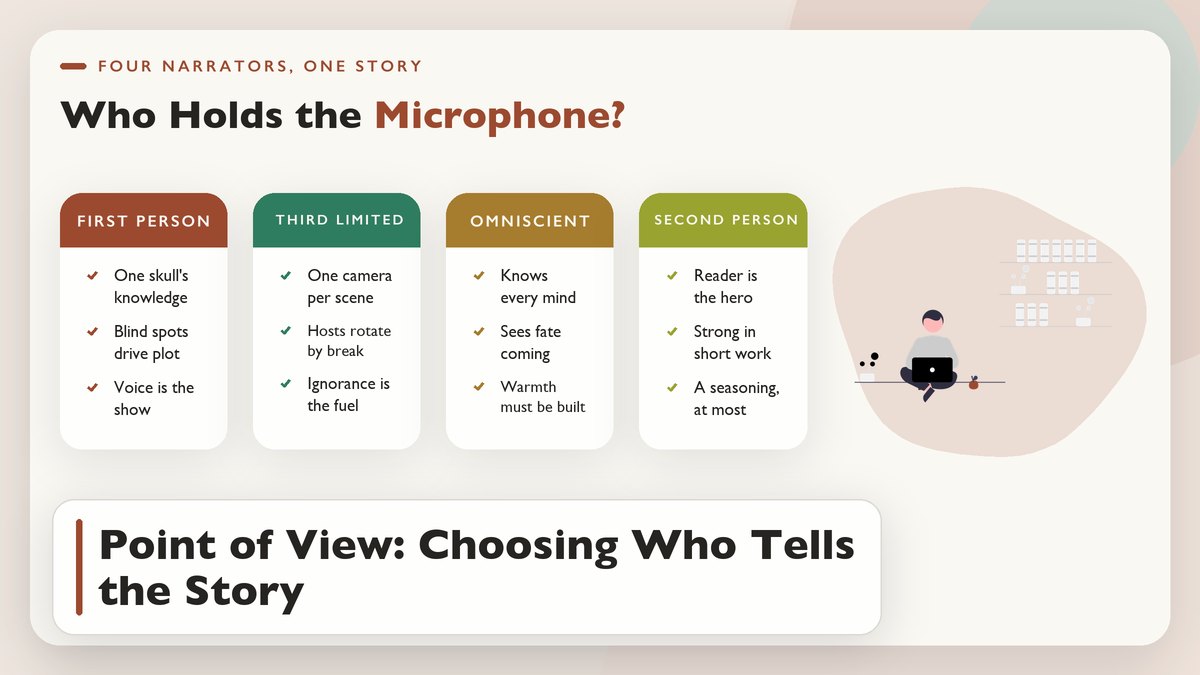
Every story is told by someone, even when it pretends not to be. Middlemarch has a narrator who editorializes freely about the action, while a present-tense thriller seems to have nobody at all. Whoever holds the microphone shapes what your reader can know, how close they feel, and what kind of book you’ve actually written. This is how to make that choice on purpose instead of inheriting whatever voice you happened to read last month.

How to Write Openings That Earn the Second Paragraph

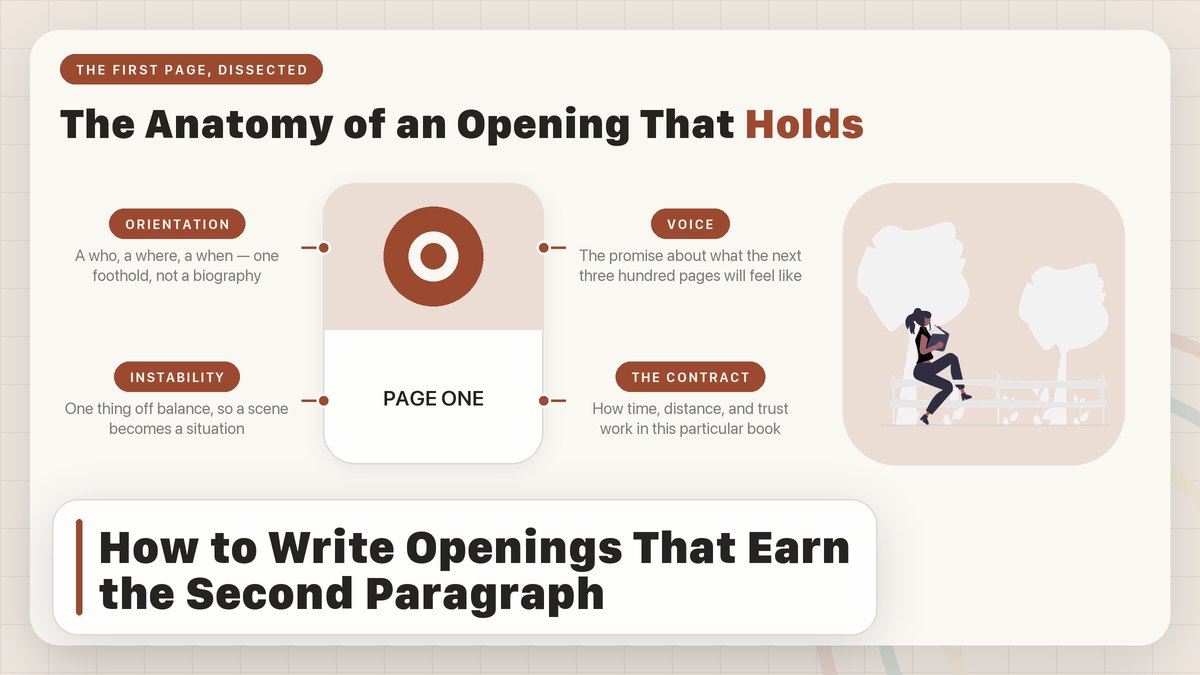
Agents report reading the first paragraph of a submission and knowing, most of the time, whether they’ll keep going. Readers do the same thing at the bookstore, only faster and less politely. This is a piece about what the first paragraph is actually for, and how to write one that buys you the second.